Learn to Check participates one more year in the celebration of the Day of Europe of the European Parliament
The day began with the arrival of student groups and an institutional welcome that included a video message from the President of the European Parliament, Roberta Metsola, as well as the interventions of the Minister of Education and Vocational Training, Esther Niubó, and the MEP Diana Riba, vice-president of the Committee on Culture and Education of the European Parliament.
Throughout the morning, the students participated in various educational and recreational activities aimed at reflecting on European values, democracy, technology and disinformation. Among the highlights were the live recording of a special LOFT program of 3Cat, led by Gal·la Castelltort and Alberto Gadel, where issues such as mental health, social networks and other current issues were discussed.
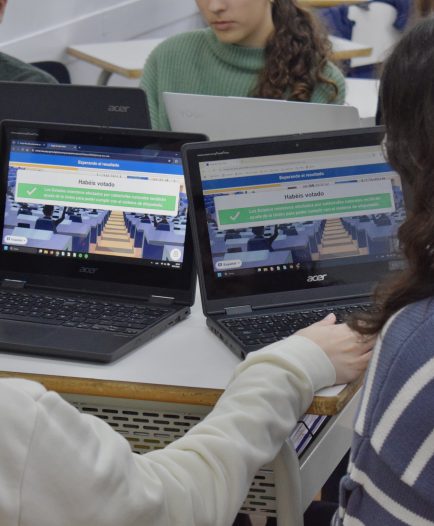
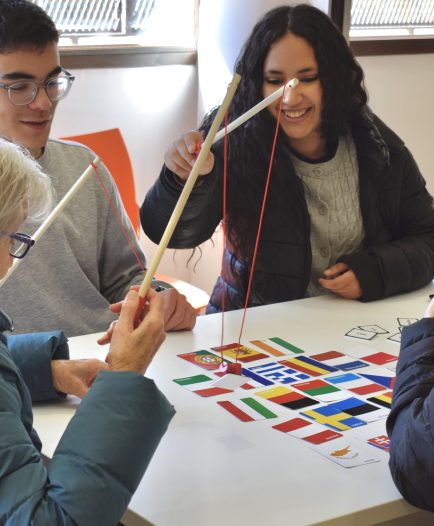
In this context, Learn to Check once again had a prominent presence, revitalizing several participatory spaces focused on critical thinking and digital verification. During breaks and moments of entry and exit of the groups, the team of trainers proposed interactive activities so that young people could test their skills to detect manipulated content, identify reliable sources and develop critical thinking.



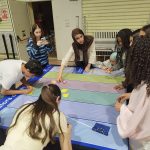
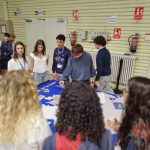



Learn to Check spaces
The Learn to Check team promoted different activities specifically designed to connect the challenges of disinformation with the daily reality of young people and with the current European context.
Verification Doors
In this space, participants had to identify altered images, content generated with artificial intelligence and misleading headlines linked to European issues. Through participatory dynamics and digital verification tools, students learned to question viral content and contrast its origin.
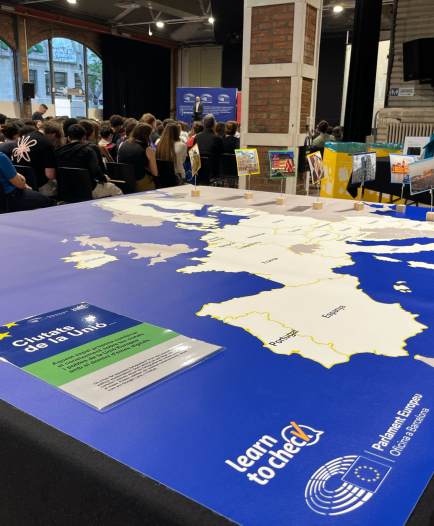
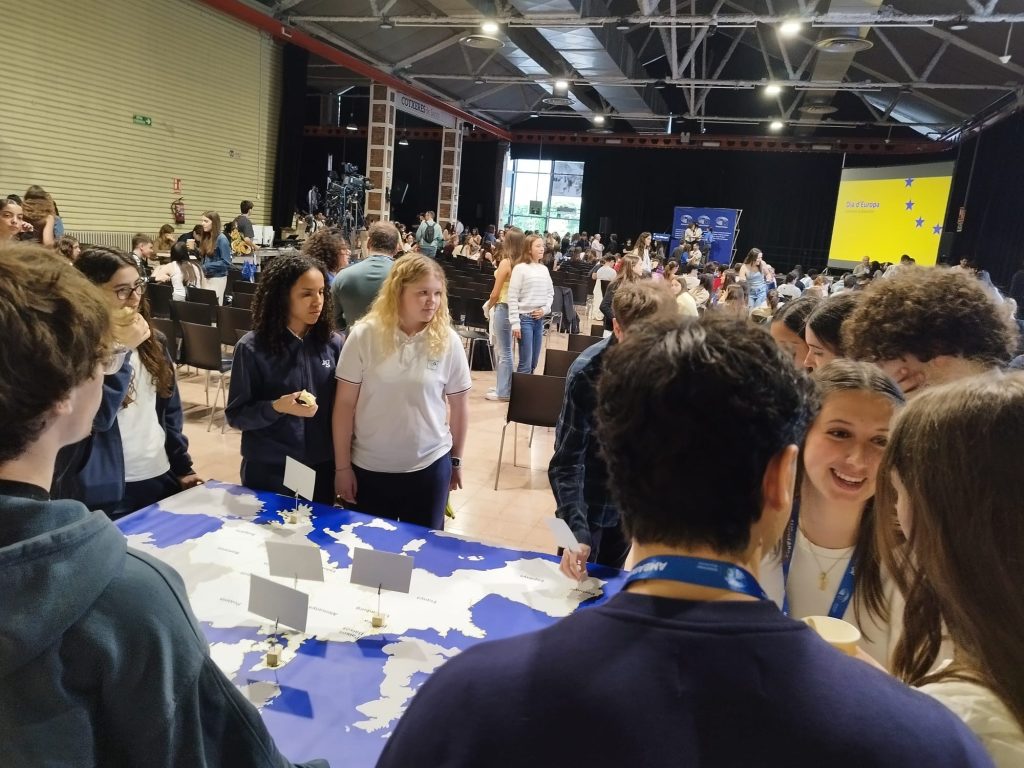
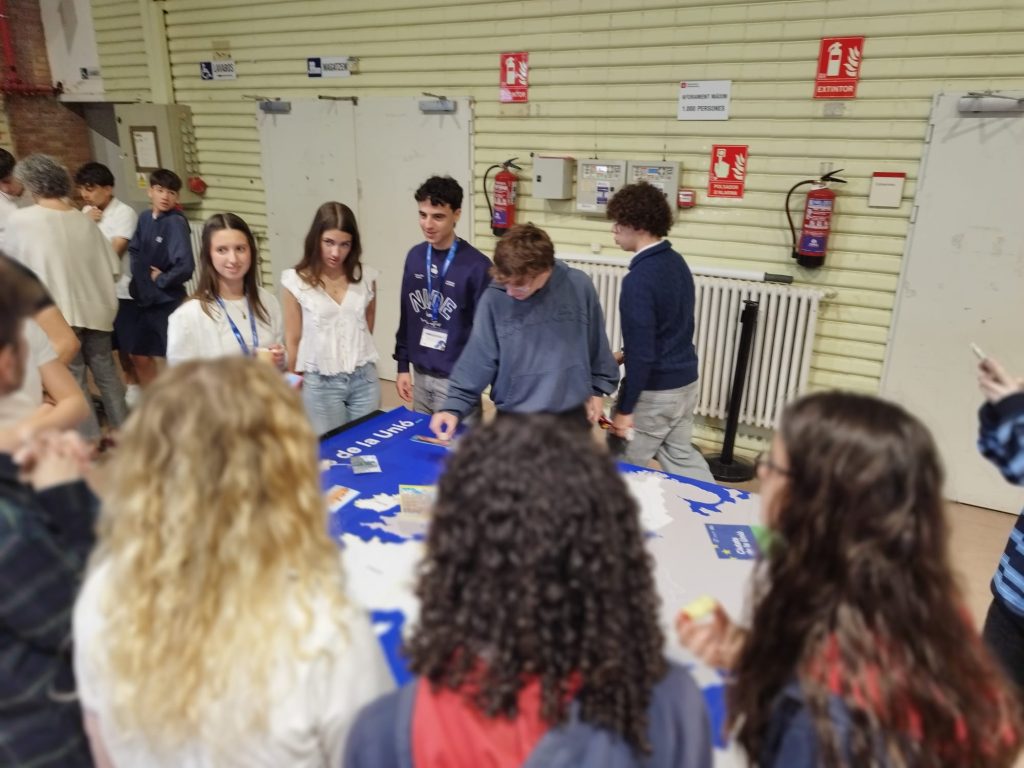
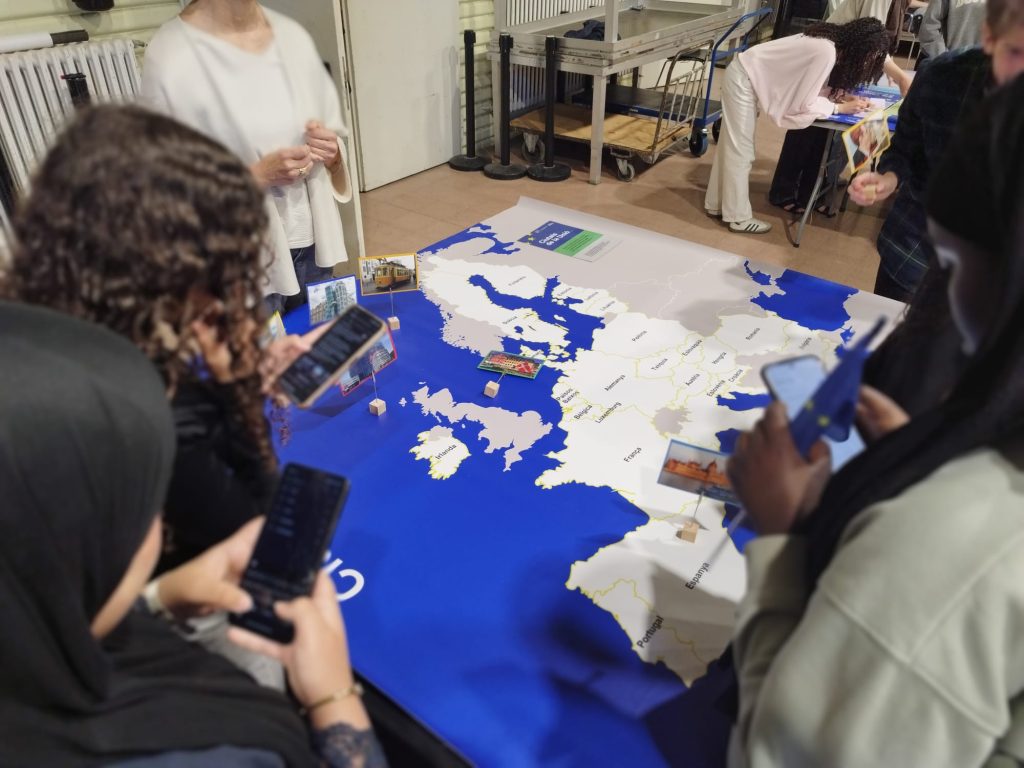
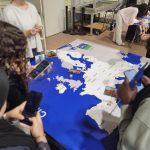
Union cities
Through the map of Europe, the students put into practice basic geolocation techniques to check images and locations. The activity combined geographical knowledge and the use of digital tools such as Google Lens, to identify the buildings, posters or landscapes of the different photographs to place them on the map.
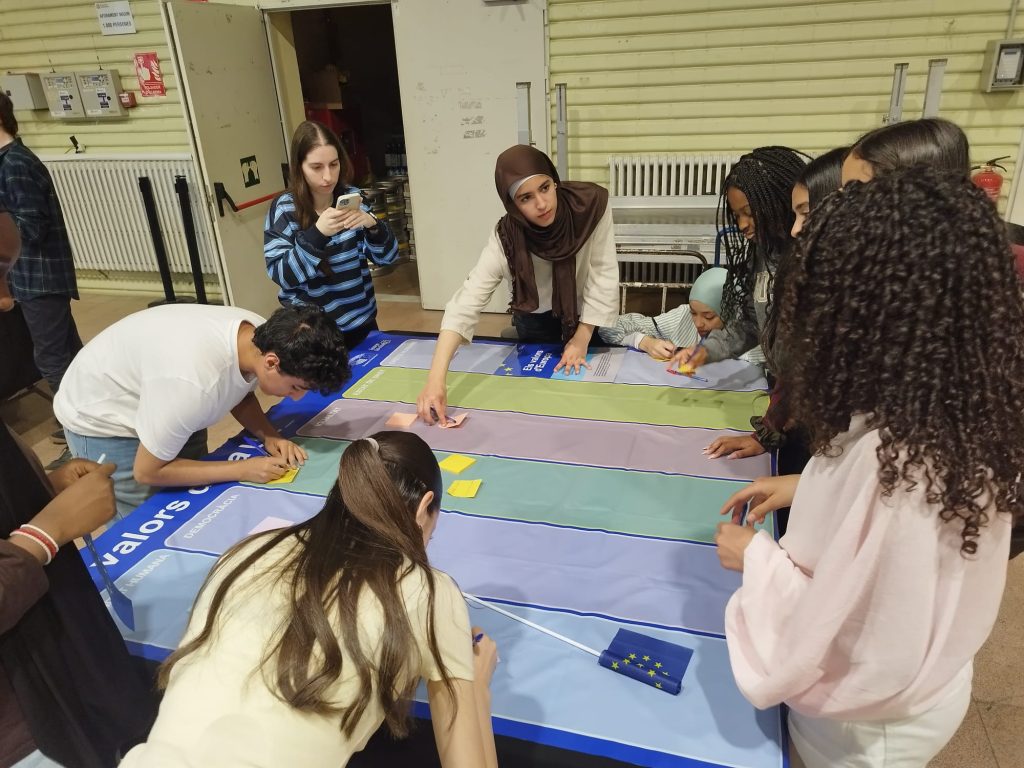
The values of Europe
This participatory space invited students to reflect on the values of Europe and the challenges they consider most important for their generation. The contributions of the participants were collected in a collaborative mural that showed the ideologies and beliefs of these, related to democracy, equality, freedom and human rights.
The day ended with the interpretation of the European Anthem by musicians from the ESMUC and with an institutional farewell that highlighted the role of young people in the construction of a more democratic, critical and prepared Europe in the face of the information challenges of the present and the future.