Pharmacy students in Girona are training to combat health misinformation
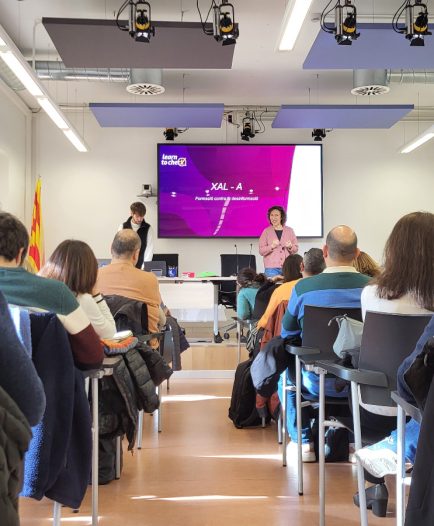
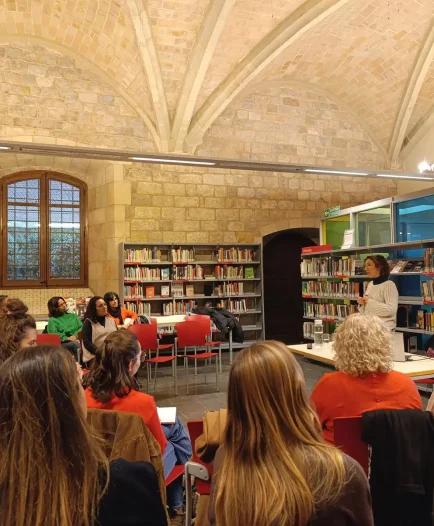
Around twenty students from the Pharmacy Vocational Training program at the Narcís Xifra i Masmitjà Institute in Girona participated in a training workshop focused on detecting hoaxes and misinformation about health and science. The activity was organized by EFE Verifica and led by Learn to Check, with the aim of strengthening critical thinking skills in future healthcare professionals.
The workshop is part of the project “Fake News, Real Victims,” an initiative that analyzes the impact of misinformation on people. The project includes the report “Francisca’s Emptiness,” framed within the health sector, which recounts, through the testimony of a woman, the real consequences that prejudice and a lack of accurate information can have after she was subjected to forced sterilization after giving birth because she was HIV-positive.
The training focused on equipping students with the criteria and tools to critically analyze health and science information circulating online, especially on social media and messaging platforms.
Through real-world examples, students learned to identify warning signs in viral content, to be wary of alarmist headlines, and to verify whether information is scientifically sound. The workshop emphasized the importance of consulting reliable sources, verified studies, and official organizations, as opposed to messages that appeal to emotion or promise miracle cures.
One of the most valued aspects of the activity was the discovery of practical resources for verifying content related to medications, treatments, and purported scientific advances. For many participants, the training raised awareness of the real impact that misinformation can have on public health, as well as the responsibility they will assume in their future careers.
In addition to learning verification techniques, the workshop provided an opportunity to reflect on the role of pharmacy professionals as key agents in combating misinformation, especially when assisting people who come to them with questions arising from misleading content.
With initiatives like this, Learn to Check continues to work to promote critical thinking and media literacy in education, helping to train professionals capable of identifying, questioning, and stopping the spread of misinformation about health and science.