How to analyse manipulated content on social media?
We spend an average of 2.5 hours per day on social media, approximately one-third of the total time we spend online, and young people even more, an average of six hours
Why is it important to have a critical attitude towards content disseminated via social networks?
To answer this question, we need to analyse our behaviour while using social networks and, at the same time, the characteristics of the content itself. According to studies carried out in 2024, we spend an average of 2.30 hours a day on social media, approximately a third of the total time we are connected to the internet. For young people, the figure is even higher: 6 hours using social networks.
This contact with social networks is also carried out in a distracted way (between viewing various social network sites or pages that are more or less professional or of family origin); in different places (home, transport, work, cafés) and on different media (computer, mobile phone and even mixing entertainment with journalistic or scientific information). The attention economy is finite. The process has limitations in terms of evaluating what we see.
A 2017 study on news consumption reveals that we read news mainly by accident. On the other hand, we have to take into account the ease of production, which means that any person or organisation can produce and share false, incorrect or manipulated messages, requiring greater attention to the credibility of the message. After all, how do we pay attention to this content that is so often consulted via scroll?
Warning signs when first analysing content on the web?
Take a look at this example. Check it out below
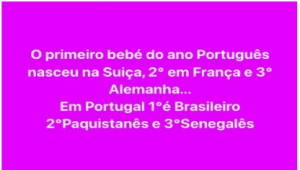
Translation: The first Portuguese baby of the year was born in Switzerland, the 2nd in France and the 3rd in Germany… In Portugal, the 1st is Brazilian, the 2nd Pakistani and the third Senegalese.
The main symptoms of the content:
– Piece with no attributed source
– Biased message, in this case to imply that there are too many immigrants in one country.
Note the rules of action:
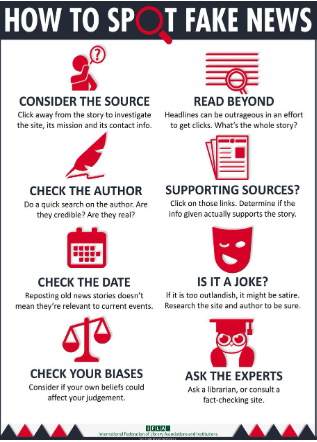
Suggestions based on interpretation:
- Story with exaggerated contours
- Use of too many adjectives
- Narratives that are too emotive
- Lack of source or altered title
- Use of imitation newspaper design
- Sloppy and informal language
- Simple solutions to complex problems
- Conspiratorial tone
- Discriminatory and accusatory speech
Example of a manipulated message
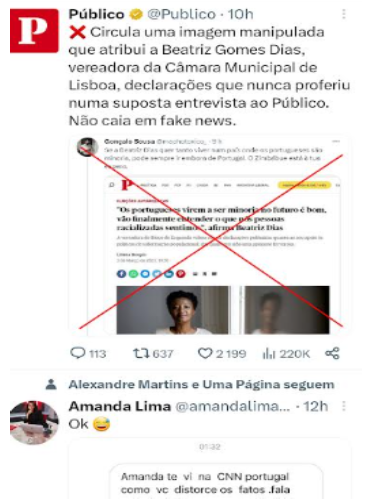
Warning signs
-
Applying the warning signs
-
Exaggerated message contours
-
Imitation of newspaper design
-
Sloppy language with errors
-
Discriminatory and accusatory speech
It should be noted that although the denials were very swift, and the journalist whose name is on the fake news has even taken action on the X network, the denial did not reach the entire universe where the manipulated news circulated, according to a member of the Vost Europe association. PT_Invictus, among others, did not contact the denial. In other words, the reach of the manipulated news was greater.
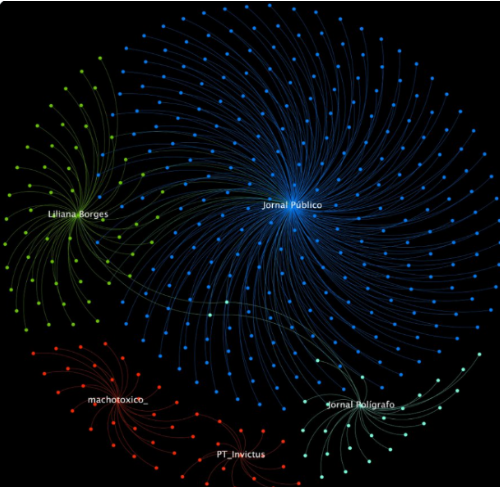
The psychological aspects of the user should also be taken into account, namely the evidence that we tend to accept what is shared by family and friends and that we tend to devalue information if it is presented with humor, for example.
Three strategies to check in case of suspicion:
- Investigate who has posted on the network itself. These are often fake profiles with abstract photos or created by Artificial Intelligence (AI).
- Search for the same information on search engines, preferably in leading newspapers. If it’s not news in a newspaper, it’s probably not correct information.
- Analyse who comments to see if this information is shared elsewhere and what the trail is.
Work on the initial example of the first babies of the year:
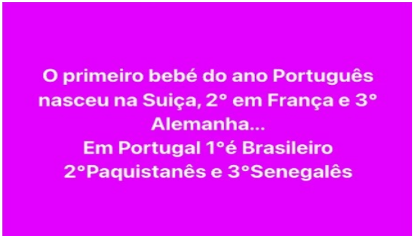
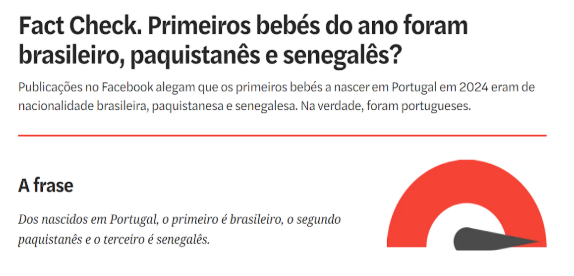
When analysing the message about the babies of the year, the verification carried out by an accredited newspaper, Observador, helped with the task.
The information is false. The first babies of the year in 2024 were Portuguese. See the verification carried out by Observador, a Portuguese online newspaper.
How can I do the verification quickly?
There are two international organisations that accredit fact checkers. The US IFCN,, and the European EFCN. They present a list of certified verifiers who fulfil the methodological rules of verification and transparency. If the verifications are presented by companies with the credibility seals of these organisations, take them into consideration.
What tools are there for you to become a fact checker?
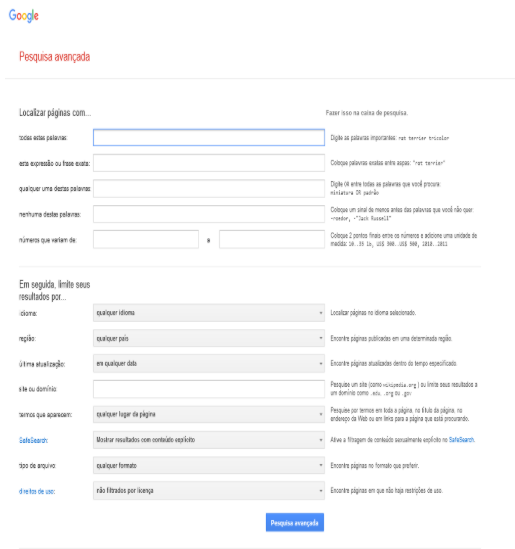
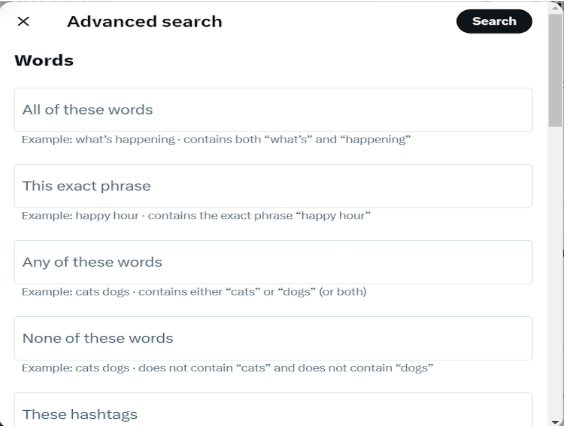
There are advanced searches on Google and X, for example, which allow you to search for information on certain content in detail. Just search for ‘Advanced search’.
X
How do I check images and videos?
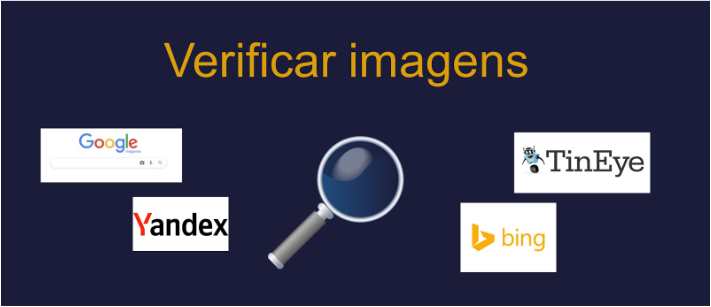
Images can be analysed using various applications. The simplest is available from Google images. By placing the image in this box, you can find out where the photo has been published in the past.
Check images
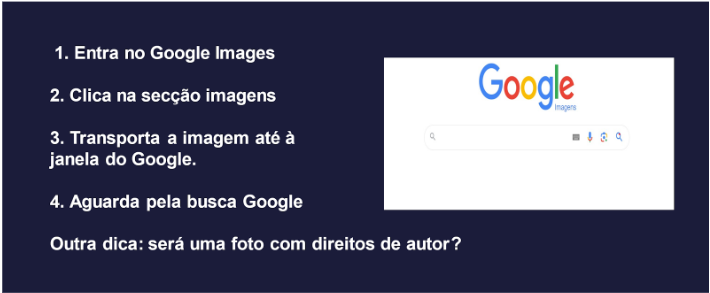
Translation:
- Enter in google images
- Click on the images section
- Transport the image to the Google window
- Wait for Google Search
Another tip: Look for copyright
An example
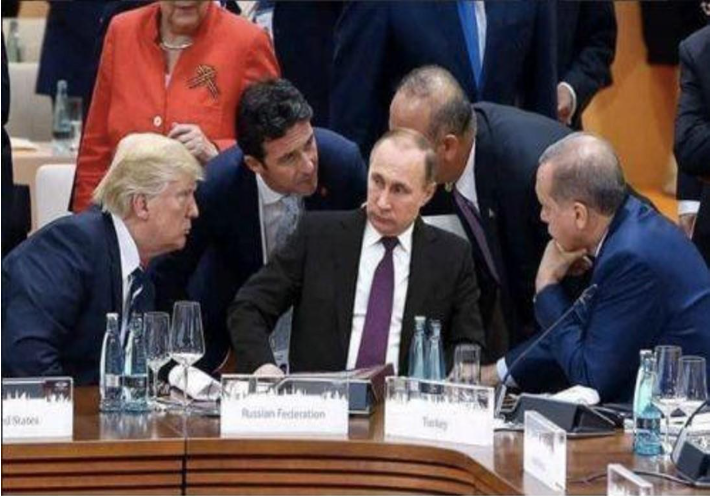
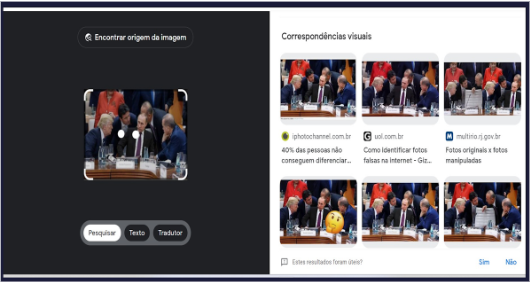
If you come across an image showing an empty chair where Vladimir Putin used to be, you have a clue that supports further verification.
Bing
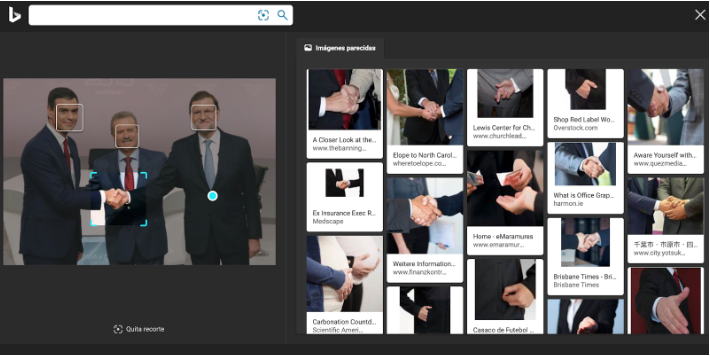
Microsoft’s Bing Images is a tool that allows you to use the magnifying glass to analyse the details of a photo, as you can see in the example below.
TinEye
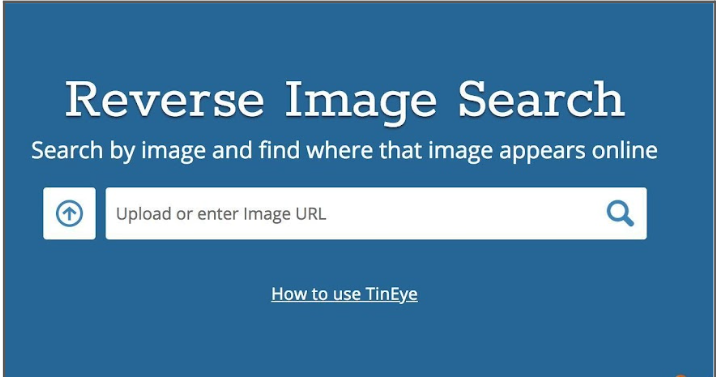
The TinEye platform allows you to analyse the image and see its history, which can be very useful for verification as it allows you to retrieve the photo’s history, whether it has already been published and whether it has been manipulated in the meantime.
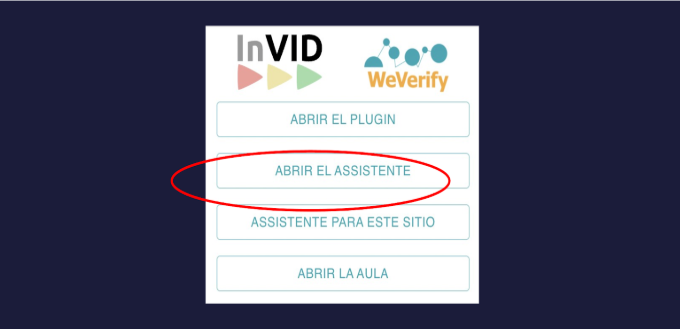
Complete toolbox: InVid
There’s also a very handy toolbox that you can add as an extension to Chrome and Firefox. To use it, simply upload an image and then do an assertive search for what you want. This tool is widely used by verification professionals.
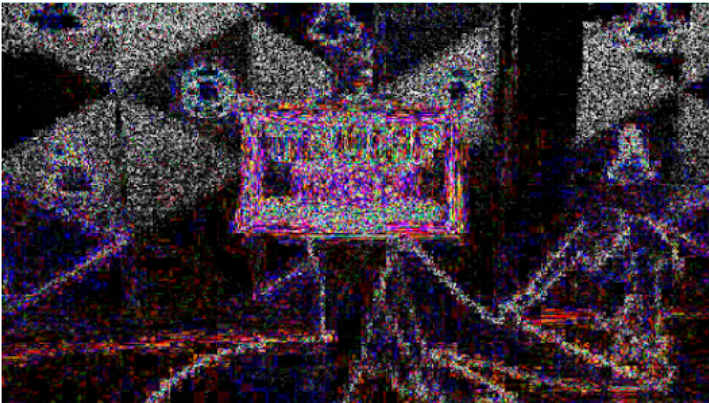
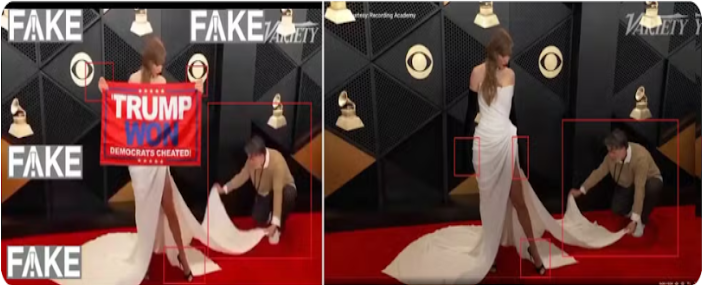
This example with Taylor Swift shows how a forensic search on InVid can reveal that parts of the image have been manipulated. The red dots correspond to the tampered parts.

To analyse videos, the procedure is similar, since this application allows you to take separate images – ‘frames’ – which can then be analysed.
What do fact checkers do when they can't confirm the data?
You haven’t always been able to ascertain whether a piece of news that you think is fake really is, and you can’t find this work on professional fact-checking sites? It can happen. According to the methodological rules for fact-checkers, established by the international organisations IFCN and EFCN, verification must obey very clear rules and the disclosure of sources is one of them. If they can’t identify the source of the news and verify with facts that it is false, they can’t publish it. Therefore, the most sophisticated manipulations can escape fact-checkers. In any case, maintaining doubt and not sharing suspicious information is already a big step in favour of quality information and knowledge.
Professional fact-checkers also use accredited experts, researchers and scientists to analyse certain content because of its virality. The charter of principles of these organisations – IFCN and EFCN – recommends listening to the best experts in the field.
For example, the manipulation of information about electric cars has been denied in various media and replicated by fact checkers. There is also a tendency for fact checkers to focus on explanatory articles that dismantle misinformation in the area of health. Many of these even correspond to old ideas that have gained visibility with the popularity of social media. It’s worth being wary if a controversial topic has gone viral.
It should also be emphasised that tools are invaluable in the verification process, but that doubt and suspicion make all the difference in boosting research.