Learn to Check trains communities in Raval against disinformation and religious hate
The second workshop of the project “Fake News, Real Victims” is held, promoted by EFE Verifica and taught by the organization Learn to Check.
In the Raval neighborhood of Barcelona, the second workshop of the ‘Fake News, Real Victims’ project was held. This initiative, promoted by EFE Verifica in collaboration with Learn to Check, aims to provide citizens with tools to detect and combat disinformation in communities affected by it. This time, the Santa Pau – Santa Creu library in the Raval neighborhood hosted 25 people who actively participated in activities designed to understand how hoaxes are generated and spread to incite hatred against other religions on social media. The event was held in partnership with the Raval Interreligious Group.
During the session, the report “Killed by a Rumor” was shown, which addresses how misinformation can trigger violence and religious hatred, with irreversible consequences. After the viewing, participants worked with practical verification tools and analyzed real cases of rumors with social impact.
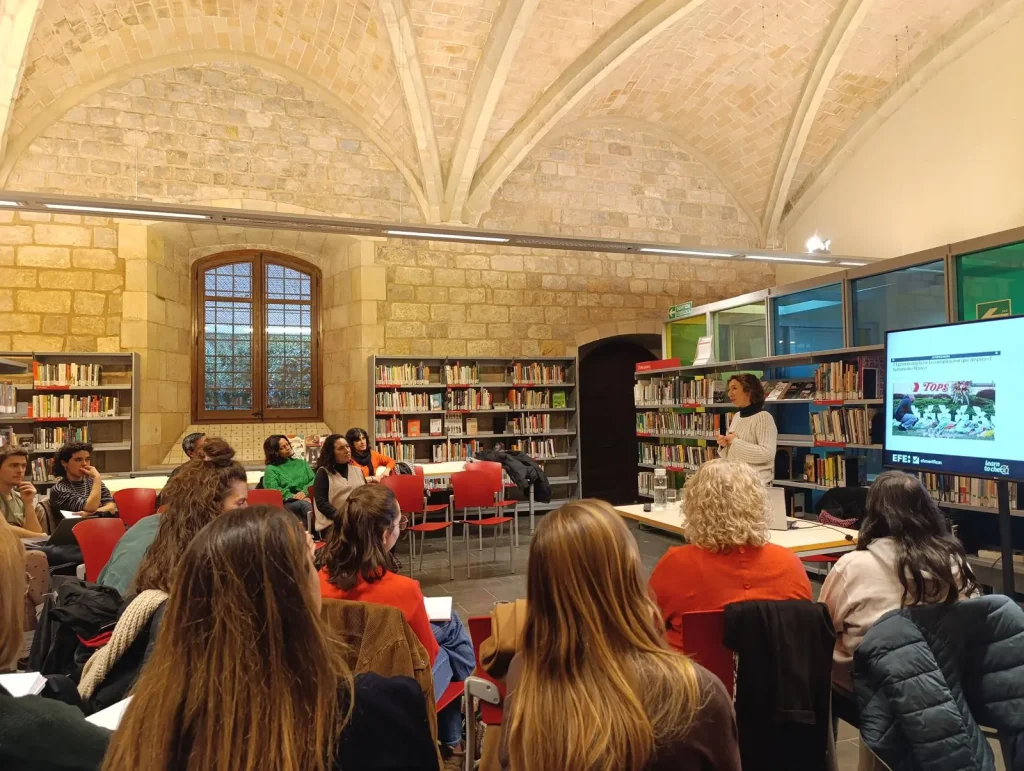
The workshop was led by Nereida Carrillo, president of Learn to Check, who assisted participants and guided them in using basic fact-checking techniques, such as reverse image search, identifying reliable sources, and critically analyzing viral content circulating on digital platforms.
During the session, real-world cases of disinformation were examined, allowing participants to recognize the most common patterns in hoaxes and learn to verify and cross-check information before sharing it. This hands-on approach helped strengthen critical thinking and demonstrated that anyone, with the right resources, can contribute to curbing the spread of fake news.
The initiative is part of a project by EFE Verifica and Learn to Check that aims to strengthen media literacy in neighborhoods and communities particularly vulnerable to disinformation. The project’s collaboration with the Raval community allowed the discussion to take place within an environment characterized by religious and cultural diversity.
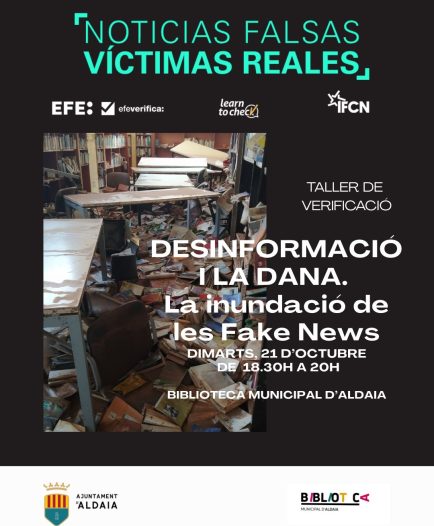
This is the second of six workshops to be held as part of the project, following the one held in October in Aldaia (Valencia) which focused on the misinformation that plagued the area after the DANA disaster.
Other projects to mitigate the damage of disinformation
El proyecto Noticias falsas, víctimas reales se suma a otras iniciativas que Learn to Check está impulsando para concienciar sobre los daños de la desinformación e impulsar la verificación y el pensamiento crítico. Ejemplos de ellos son el proyecto Media and Information Literacy Community Connections (MILCC), un proyecto internacional para formar en AMI a 150 profesionales de bibliotecas en España, Irlanda y Portugal o el proyecto de talleres intergeneracionales Lo que yo sé sobre Europa. Y tú, ¿qué sabes?, para fomentar la verificación digital, el diálogo intergeneracional y los valores democráticos.
The project “Fake News, Real Victims” joins other initiatives that Learn to Check is promoting to raise awareness about the harms of disinformation and to encourage fact-checking and critical thinking. Examples include the Media and Information Literacy Community Connections (MILCC) project, an international initiative to train 150 library professionals in Spain, Ireland, and Portugal in information literacy, and the intergenerational workshop project “What I Know About Europe. And You, What Do You Know?”, which promotes digital fact-checking, intergenerational dialogue, and democratic values.