Foundations of Media Literacy
Every moment, you are surrounded by media messages designed to capture your attention, shape your opinions, and influence your choices
Think about all the media you consume in a single day—online videos, news articles, TV shows, advertisements, social media posts, and more. Every moment, you are surrounded by media messages designed to capture your attention, shape your opinions, and influence your choices. In a world where media content is everywhere, thinking critically about it is more important than ever.
All media is created by people. Every piece of content involves choices: what to include, what to leave out, who to target, and who to ignore. These decisions are shaped by the interests of individuals, corporations, and the broader systems they operate within.
Have you ever wondered:
- Why do social media apps keep us scrolling for hours?
- Why do some voices and issues get all the attention while others are ignored?
- Why do some sources tell the truth while others spread misinformation—and how can you spot the difference?
- Why do influencers and media push unrealistic beauty and lifestyle standards?
To navigate today’s media landscape, we must understand not just what is being communicated but also how and why it is created. This lesson explores four key concepts that will help you think critically about media. In the process, you will develop the skills to analyse, question, and engage with all kinds of media more thoughtfully.
1. Media representations
Everywhere we look, we are surrounded by media representations—images, words, and messages that shape how people, ideas, and issues are portrayed. These representations influence the way we see the world, understand social norms, and even define ourselves.
We encounter media representations constantly, often without realising it:
- On social media, carefully curated posts, filtered selfies, and viral trends create ideals about beauty, success, and lifestyle.
- In films and TV shows, the way characters are written and cast reinforces ideas about who gets to be a hero, a leader, or the comic relief.
- Through advertisements, billboards, magazine covers, and digital ads tell us what is desirable, from body types to luxury lifestyles.
- In politics and news, the way politicians, journalists, and experts talk about issues shapes public perception and priorities.
These media representations are not neutral. Every representation involves choices about what to include, what to leave out, and whose voices get heard. They are shaped by who is telling the story, what their goals are, and what assumptions they hold.
Some representations are repeated so often that they begin to seem natural or normal. By thinking critically about media representations, we can better understand their impact on society and on our own identities.
Let’s look at some examples:
Unrealistic Beauty Ideals
Media representations play a major role in setting beauty standards for women and men. From magazine covers to Instagram influencers, certain physical traits are constantly promoted as the “ideal.” These ideals affect self-esteem, mental health, and even societal expectations.
Historically, the media have overwhelmingly portrayed a narrow, unattainable standard of female beauty. Social media have made beauty standards more intense. Meanwhile, the beauty industry profits from creating insecurities, selling everything from anti-aging creams to weight-loss supplements, reinforcing the idea that women must constantly “fix” themselves.
Unrealistic beauty standards don’t just affect women—men also face intense pressure to fit into a narrow definition of attractiveness. Mainstream media often portrays the ideal man as muscular, tall, and physically dominant, reinforcing the idea that a man’s worth is tied to strength and size. In contrast, men who are balding, short, or overweight are often the punchline of jokes, reinforcing harmful beauty biases.
Online fitness culture plays a huge role in reinforcing these ideas. Fitness influencers promote workout routines that emphasize bulking up, cutting fat, and achieving ‘shredded’ abs, often using edited images and lighting tricks to enhance their results. Gym culture can sometimes create an “all-or-nothing” mindset, where body size and muscle definition are seen as a reflection of dedication, discipline, or even self-worth.

Diminishing the Victims of Crime
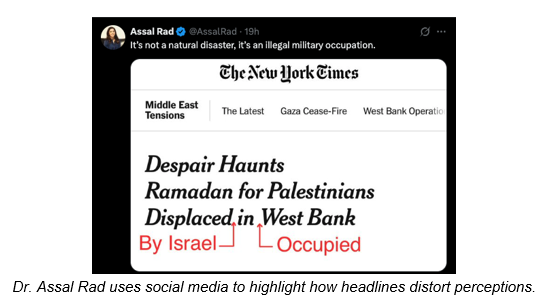
Journalists do more than report events. The words and images they choose to use frame those events in ways that influence our understanding. When it comes to crime for example, the words used frame an understanding of who is responsible, who is a victim, and how serious a crime is. News stories can be presented in ways that downplay violence, shift blame, or make crimes seem less urgent or severe than they really are.
One way news media minimizes responsibility for violence is by using passive voice in headlines and reports. Instead of clearly stating who committed the act, passive phrasing can make events seem vague or inevitable, reducing the sense of accountability.
For example, in reports about Israeli violence against Palestinians, headlines often use phrases like:
- “Palestinians killed in airstrikes” instead of “Israel bombs Palestinian neighborhood, killing civilians.”
- “Clashes erupt between Israelis and Palestinians” instead of “Israeli forces open fire on Palestinian protesters.”
This framing makes violence seem like a neutral or natural occurrence rather than a deliberate act carried out by an entity with power. It also erases the agency of the perpetrator, making it harder to recognize patterns of oppression or injustice.
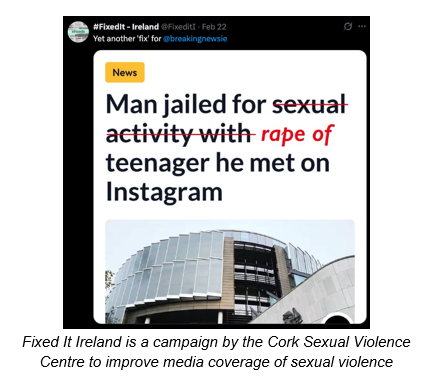
Similarly, news media often use language that softens or obscures the severity of sexual violence. For example,
- “Sex with an underage girl” instead of “Rape of a child.” The first phrase implies consent, which legally isn’t possible.
- “Victim had been drinking” instead of “Attacker targeted victim.” The first phrase shifts responsibility away from the perpetrator.
How to think critically about media representations
The next time you encounter media—whether it’s a social media post, a film, an ad, or a news story—ask yourself:
- Who is being represented, and who is missing?
- How are people or ideas being portrayed? Are stereotypes being reinforced or challenged?
- What language is being used, and how does it shape our understanding?
- Who benefits from this representation? Who might be harmed by it?
- What perspectives or realities are being downplayed, distorted, or erased?
By questioning media representations, we move beyond passive consumption. We become more informed, more aware, and more capable of recognising potential bias, stereotypes, and power dynamics.
2. Media ownership and funding
We often think of the media as a source of entertainment or information, but behind every news outlet, social media platform, and streaming service, there are owners and funders with interests, priorities, and agendas. Media ownership and funding affects what stories are told, how they are framed, and even which voices are heard.
Even though more people are creating and sharing content than ever before, the media industry has actually become more concentrated. A handful of powerful corporations and individuals own most of the media we consume whether its news outlets, TV networks, film studios, or social media platforms. This means that while it feels like there are endless media options, much of what we see and hear reflects a small set of interests.
The power of owning media
The acquisitions of major media platforms by influential figures like Elon Musk and Jeff Bezos, despite potential financial losses, highlight the strategic value of media ownership in shaping public discourse and advancing personal or political agendas.
In 2022, Elon Musk (one of the world’s richest people) acquired Twitter for approximately $44 billion, rebranding it as X. In some ways, this was a surprising move because Twitter was not a profitable company. The true value of the company lies in its reach. As owner, Musk was able to influence the platform’s algorithms and content moderation policies. This control enables the amplification of specific narratives and the suppression of others, effectively steering public conversations in directions that align with his interests.
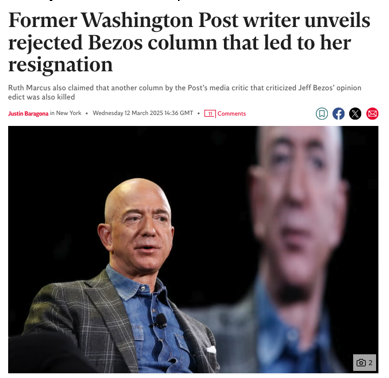
In 2013, Jeff Bezos (one of the world’s richest people) purchased The Washington Post. Although the newspaper business is in sharp decline, The Washington Post is a prestigious news source. In 2025, Bezos announced that the newspaper would no longer feature any editorials critical of “free market” economics. This alignment raises concerns about the newspaper serving as a vehicle to promote the owner’s business interests and political views, potentially at the expense of journalistic independence.
- Resource: For an overview of who owns news media in different countries, including Ireland, see the Media Ownership Monitor
The influence of advertising
When media rely on advertising for revenue, they have a strong incentive to align their content with those financial interests. This dependency significantly delayed public awareness of the dangers of smoking.
By the 1960s, scientific evidence linking smoking to cancer was well established. However, cigarette advertising remained legal for decades, and the tobacco industry remained one of the biggest sources of ad revenue for media organizations. To protect this revenue, many media outlets engaged in “latent censorship”—avoiding anti-smoking content, toning down coverage of health risks, and even refusing to publish public health ads about smoking’s dangers (Source).
At the same time, some media outlets took a principled stance, refusing to accept tobacco advertising. Studies show that these outlets provided the public with a more accurate understanding of smoking’s health risks, proving that advertising influences not just what media promote, but also what they choose to omit.
Now, consider today’s media landscape. How often do you see media content funded or sponsored by alcohol and gambling companies? Does this financial influence affect how these industries are discussed and portrayed? Are potential harms—such as addiction and public health concerns—given the same level of attention as the entertainment and lifestyle aspects of these products?
The influence of advertisers on social media
Just like traditional media, social media platforms are not neutral spaces. They are businesses driven by profit, and their biggest funders are advertisers and corporate partners.
Consider the following ways financial influence shapes social media platforms:
- Platforms often suppress or remove content that could harm relationships with major advertisers. Topics such as climate change or human rights abuses may be demoted or banned
- Large corporations spend billions on social media advertising, giving them leverage over platform policies. In some cases, companies facing public scrutiny have had critical content about them deprioritized or removed, showing how financial relationships can shape public discourse.
- While platforms claim to uphold strict content policies, enforcement is often influenced by financial and political interests. High-profile figures and corporations with strong advertising ties sometimes receive leniency, while independent creators or activists find their content restricted or demonetized.
While social media platforms present themselves as open, democratic spaces, their dependence on advertising revenue means they often serve the interests of corporate funders first. This affects which industries receive scrutiny, which voices gain visibility, and what narratives dominate public discussion.
How to think critically about media ownership and funding
To be media literate, we must recognize that ownership affects content. When consuming media, ask yourself:
- Who owns this platform or publication?
- What financial or political interests might influence its content?
- Are alternative viewpoints being represented, or is there a clear bias?
- Does this media company benefit from promoting certain ideas or suppressing others?
By questioning who controls the message, we become more aware of bias, influence, and the power structures behind the media we consume.
3. Regulation
All media—whether news organisations, social media platforms, or entertainment companies—operate within legal frameworks. Governments create rules to regulate what is and isn’t allowed, and in some cases, industries set their own standards to avoid stricter government intervention. Understanding how media is regulated is a key part of media literacy, as these rules shape the information and content available to the public.
Different models of regulation
Media regulations vary across countries and industries, and there are different models of enforcement:
- Regulation – When the state sets legally binding rules that media must follow.
- Self-Regulation – When an industry voluntarily sets and follows its own rules, but these are not legally binding.
- Co-Regulation – A mix of both, where industries create rules that have some government oversight.
In Ireland and many other countries, different regulatory models apply to print media (newspapers, magazines), broadcast media (TV, radio), and online media (websites, social media accounts).
Let’s look at some examples
Regulation of political news coverage
Media regulation is particularly important during elections and referendums, as biased or misleading coverage can influence voters. Different types of media have different obligations:
Regulated Media: As TV broadcasters, RTÉ and Virgin Media are directly regulated. They must follow strict rules when reporting on politics, especially during elections or referendums. For example, these rules require them to: remain impartial and not advocate for any political party; provide balanced coverage to different viewpoints; and follow fair and accurate reporting standards. While people may debate whether broadcasters always meet these ideals, they can be held accountable. If they break the rules, they could face fines or even lose their broadcasting license.
Self-Regulated Media: In contrast, traditional or online newspapers have no legal obligation to be impartial. They can produce openly biased stories, endorse political parties or candidates, and they are not legally required to provide balanced coverage. However, in Ireland, most professional news media are members of the Press Council, which has a code of ethics. If someone wants to complain about a newspaper article, they can file a complaint with the Press Ombudsman, who will investigate and issue a decision. This decision is not legally binding, but most media tend to comply.
Co-Regulation: In the EU, tech companies and regulators follow a co-regulation model during elections to prevent misinformation, foreign interference, and unfair political advertising. While governments set legal requirements, platforms like Facebook, YouTube, and TikTok are also expected to self-regulate by enforcing transparency and moderation policies. For example, the EU’s Digital Services Act (DSA) requires large platforms to remove illegal content, prevent election-related disinformation, and disclose political advertising sources. However, critics argue that tech companies fail to do this consistently.
Regulation of advertising and influencers
Advertising is an interesting case because some areas of advertising are strictly regulated, while others rely more on self-regulation or have loopholes that allow misleading or harmful advertising to persist.
Regulation: Certain types of advertising face strong government regulations because of their potential harm to public health, safety, or financial well-being. For example, many countries prohibit tobacco advertising and have restrictions on advertising, medicine, and gambling. Misleading advertising is also prohibited. In Ireland, the Competition and Consumer Protection Commission (CCPC) is an independent statutory body that enforces consumer protection laws. It has legal authority to take action against businesses that engage in misleading advertising, unfair commercial practices, and anti-competitive behaviour.
Self-regulation: In many countries, including Ireland, advertisers, advertising agencies, and media organizations follow a voluntary code of advertising standards. In reality, many companies fail to meet these standards. Many companies make misleading claims about being “eco-friendly” (greenwashing). Many skincare brands claim their creams or serums are “clinically proven”, but the “clinical studies” are often conducted by the brand itself, involve small sample sizes, or lack independent verification.
In Ireland, the Advertising Standards Authority for Ireland (ASAI) oversees advertising content. If an ad is found to be misleading, offensive, or socially irresponsible, the ASAI may recommend its removal, but it cannot issue fines or legally enforce bans. You may sometimes hear that an advert has been “banned”, but this is rarely the case. Typically, the ad is simply withdrawn or amended after complaints are reviewed.
Co-regulation: Influencers have operated in a grey area. In Ireland, the Competition and Consumer Protection Commission (CCPC) collaborated with the Advertising Standards Authority for Ireland (ASAI) to issue guidelines for influencers on properly labeling commercial content. This guidance emphasises that any benefit received for promoting a brand—monetary or otherwise—must be clearly disclosed to consumers. The guidelines specify that all commercial content should be labeled with #Ad or, for Irish-language posts, #Fógra, ensuring immediate recognition by consumers. The CCPC has the authority to enforce consumer protection laws, including issuing compliance notices and pursuing prosecutions for misleading advertising.
Why are online tech companies called ‘platforms’?
Traditional media companies are considered to be “publishers”. That means they have a legal responsibility for the content they produce or host. In contrast, the term “platform” is used to describe tech companies like YouTube, TikTok, X, and Instagram. By calling themselves “platforms”, tech companies position themselves as neutral spaces with no influence over content.
Think of the company that provides your mobile phone network (e.g., Three Ireland, Eir Mobile and Vodafone Ireland). It is a neutral platform insofar as it has no influence over the kinds of things you say or do when you make a phone call. It would be absurd to blame the mobile phone company if you use your phone to do something illegal.
Back in the 1990s, emerging tech companies argued that they would be just like the phone network: neutral platforms. Politicians in the US and EU accepted this and, as a result, tech companies have evaded many of the regulations that apply to traditional media. To a large degree, this remains the case even though it is obvious that online platforms are anything but neutral: they harvest data from users, they promote certain content while suppressing other content, and they decide which accounts will be promoted or banned.
Evading regulation has allowed these companies to become extremely powerful. They now use that power to lobby against regulation. What’s more, they use that power to invest in AI technologies – often developing using data they obtained without permission – and lobby against the regulation of AI.
As online platforms continue to shape public discourse, understanding how they avoid regulation—and why governments struggle to hold them accountable—is essential for critically navigating digital media.
How to think critically about media rules and laws
Media regulation is complicated, but ask yourself these questions to better understand what rules, if any, govern the media you consume:
- Are there any rules in place to protect people from harmful content or practices?
- Does anyone have to take responsibility for this content or practice?
- Is there any body or group to manage complaints?
- Is this content more trustworthy because it is regulated?
4. Trustworthiness matters
In our media-saturated world, it’s essential to think about the trustworthiness of your news and information sources. Trustworthy sources follow standards that prioritise accuracy, fairness, and accountability.
In general, news produced by professional journalists working for mainstream outlets (e.g., BBC News, Reuters) is more likely to be trustworthy than news from an unknown website or social media account. But mainstream news outlets can sometimes be biased, inaccurate, or unduly influenced by owners or advertisers. In addition, some citizen journalists adhere to high standards. That means we cannot escape the need to think critically about all information, no matter what the source.
Isn’t all news biased?
Bias refers to how people see the world. Everyone has biases, including journalists. Agenda is what a news source is trying to achieve—whether it’s informing the public, pushing a political cause, or serving corporate interests.
A news organization that clearly separates opinion from reporting, invests in fact-checking, hires professional journalists, and is transparent about sources and funding is less likely to be driven by political agenda, even if individual reporters have personal biases.
What makes a news source trustworthy?
- Commitment to Accuracy: Reliable news organisations invest in fact-checking, verification processes, and corrections when errors occur. They have strong editorial standards to prevent misinformation.
- Transparency: Trustworthy sources clearly distinguish news from opinion, disclose conflicts of interest, explain where their information comes from, and link to original sources when possible.
- Journalistic Expertise: Professional news organisations hire trained reporters with expertise in journalism or their subject area. New contributors are educated in ethical reporting practices .
- Primary Mission to Inform: A trustworthy source prioritises informing the public over pushing an agenda or sensational content.
What should I do if I think something is suspicious?
If you come across news or information that seems questionable, take these steps to verify its credibility:
- Check the Source: Is it from a trustworthy source? Look for clear author attribution, editorial oversight, and transparency about sources.
- Cross-Check with Other Sources: Reliable news is usually reported by multiple independent outlets. If only one source is making a claim, be skeptical.
- Look for Evidence: Does the story cite credible experts, official reports, or data? Are there links to original sources? Lack of evidence is a red flag.
- Watch Out for Emotional Manipulation: Sensationalist headlines, strong emotional language, or conspiracy-like claims often indicate misinformation.
- Verify with Fact-Checking Websites: Sites like TheJournal.ie, Snopes, and FactCheck.org can help confirm or debunk misleading claims.
- Consider Bias and Agenda: Does the source have a political or financial interest in spreading this information? Is it opinion disguised as news?
If something still seems unclear or misleading, it’s best to avoid sharing it until you can verify its accuracy.
- Resource: Visit TheJournal’s Knowledge Bank to find out what kind of claims require evidence and can therefore be factchecked.