What are conspiracy theories?
Conspiracy theories emerge and spread during times of uncertainty, playing on our fears to gain personal, economic, or political advantage.
Conspiracy theories attempt to make sense of specific circumstances or phenomena through simple reasoning. These explanations often follow the same pattern: a powerful group secretly conspires to achieve personal gain by harming a particular collective. While believing in conspiracy theories is not necessarily harmful—throughout history, some have been proven true—many are easily debunked with facts and often rely on distortions, misinterpretations, or outright fabrications.

The spread of conspiracy theories is not a new phenomenon. Throughout history, such theories—like anti-Judaism or witch hunts—have existed and have been used by populist leaders to manipulate their audiences -from Robespierre to Hitler and Stalin, and even many of today’s far-right leaders-.
However, the internet and social media have exponentially increased the speed at which these theories spread, exposing a larger population to them more frequently and making them seem more credible. Additionally, online platforms enable people who share these beliefs to connect easily, fostering conspiracy networks that reinforce their convictions.
What is their impact?
One might think that believing the Earth is flat or that humans never landed on the Moon doesn’t harm anyone. However, the situation changes when it comes to cases like white supremacists Anders Breivik (who murdered 77 people in Norway in 2011) or Brenton Tarrant (responsible for 55 deaths in New Zealand in 2019) both followers of the far-right “Great Replacement” theory. This theory claims that elites are deliberately replacing the native population with migrants. Moreover, according to a study published by the CIS in October 2024, approximately 30% of the Spanish population accepts some form of conspiracy theory related to the COVID-19 pandemic. This growing distrust has created a “window of opportunity” for the spread of other preexisting conspiracy theories, according to the same study.
According to December 2023 data published by YouGov, the majority of Americans (54%) believe that Lee Harvey Oswald definitely or probably did not act alone in the assassination of John F. Kennedy in 1963. Additionally, 41% believe that it doesn’t matter who wins elections because a powerful shadow group controls the world and major events. Meanwhile, 31% think that Barack Obama was not born in the United States, and 29% believe that voting machines were programmed to switch votes in the 2020 election. On the more extreme end, 20% believe that the government uses COVID-19 vaccines to implant microchips or that the government was behind the 9/11 attacks, while 18% think that humans never landed on the Moon.
What are the most popular conspiracy theories?
- COVID-19 and vaccines: During the health crisis triggered by the COVID-19 pandemic, numerous conspiracy theories emerged. These ranged from the belief that the virus was deliberately created in a laboratory to the idea that the pandemic was a strategy to impose control over the population. Others claimed that mass vaccination was a means of control, involving the implantation of microchips in those who received the vaccine.

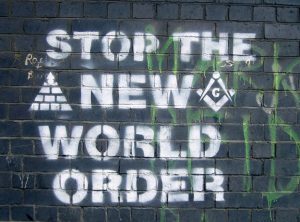
- The new world order: This theory claims that a secret group of elites controls global events, including economic and political crises, and is working to establish a single world government. It is commonly associated with figures like George Soros, the Rockefellers, the Rothschilds, and organizations such as the Bilderberg Club.
- Chemtrails: “Chemtrails” refer to the condensation trails left by airplanes in the sky. Some believe these trails are actually chemical substances deliberately sprayed by governments to manipulate the weather, control the population, or conduct biological engineering experiments. In May 2023, independent lawmaker Pablo Cambronero even submitted a formal inquiry to the Spanish government on this matter, and Madrid’s prosecutor’s office had received up to 50 complaints regarding chemtrails.

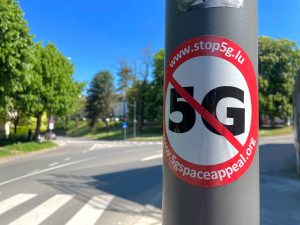
- 5G conspiracies: 5G technology, used for high-speed wireless communications, has been a source of concern for a significant segment of the population. Some claim that 5G has harmful effects on health and, in some cases, that it is part of a plot to control or track the population. During the pandemic, the theory that 5G was the cause of the disease spread widely, leading to attacks on cell towers in countries such as the United Kingdom, Belgium, Ireland, Cyprus, and the Netherlands.
- Climate change denial: Although less widespread than in other countries, a minority in Spain believes that climate change is a myth or an exaggeration promoted by political or economic interests. This group represents between 5% and 10% of the population, according to Eurobarometer surveys.

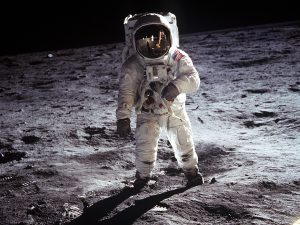
- The moon landing hoax: This classic conspiracy theory claims that the Apollo moon landings were staged by NASA and the U.S. government as part of the Cold War to showcase technological superiority over the Soviet Union. Supporters point to alleged anomalies in photos and videos of the event.
- 9/11 Conspiracy theories:There are several theories about the September 11, 2001 attacks on the Twin Towers in New York that claim that the U.S. government, in particular the George W. Bush administration, was involved or had prior knowledge of the attacks. Some versions suggest that the collapse of the Twin Towers was the result of a controlled demolition.

- QAnon: This is one of the most recent and controversial conspiracy theories related to U.S. politics. It suggests that there is a network of pedophiles and child traffickers within the global elites and that Donald Trump was secretly working to dismantle it. QAnon gained notoriety during Trump’s presidency and has been linked to several violent events, including the storming of the U.S. Capitol in January 2021 and the so-called Pizzagate incident, when in December 2016, a follower of this theory stormed a Washington pizzeria with a rifle, claiming that a group of pedophiles linked to the Democratic Party was meeting there.

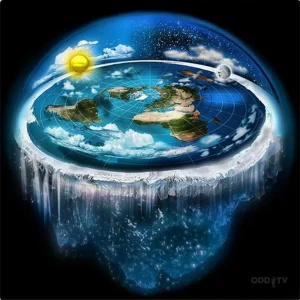
- The earth is flat: Although it has been scientifically debunked for centuries, some people still believe that the Earth is not a sphere but a flat disc. Supporters of this theory argue that space agencies and governments are hiding the «truth» about the shape of the planet for unclear reasons.
- The extraterrestrial cover-up: Many people believe that governments, particularly the U.S. government, are hiding evidence of extraterrestrial life. Area 51 in Nevada is one of the focal points of these theories, where secret experiments with alien technology are supposedly conducted. In Spain, Montserrat Mountain in Catalonia is a symbolic gathering place for followers of this theory, as alleged sightings have been reported there since the 70s.

Why do we believe in these theories?
“These theories take root in our fears”, explains Begoña Díaz, psychologist, PhD in Cognitive Science and Language, and professor at UIC Barcelona. According to the expert, conspiracy explanations tend to emerge in times of “widespread stress”. “We are a great society because we know many things. And when we don’t know, we always seek that information, we need to understand. At moments when we lack explanations or struggle to make sense of what’s happening, these theories appear”, says Díaz.
The spread of these “lies” may sometimes simply aim to “attract attention”. “But other times, there are economic or political interests”, Díaz warns. “It’s difficult to find a single explanation”, she continues, “but behind every lie, there is an intended benefit. Our role is to look beyond the falsehood and understand what the person spreading it gains from having our attention”.
“There are a series of psychological phenomena that explain why we persist in our beliefs even when proven wrong,” said Ramón Nogueras, psychologist and author of the book Why Do We Believe in Nonsense? How We Deceive Ourselves, in RNE. First, human beings are “imperfect information processors”, argues Nogueras. Additionally, he explains, “we are pattern-generating machines” and tend to cling to a given pattern or conclusion while “seeking confirmatory information”. Using the example of the 2023 storming of Brazil’s Congress by Bolsonaro supporters, Nogueras illustrates how “assuming there was electoral fraud is far less damaging than accepting that people simply rejected our proposal”. On the other hand, those who spread conspiracy theories often appeal to the “principle of scarcity”. “When information is perceived as scarce, as if someone is trying to suppress it, or as difficult to access, we tend to value it more and assign it greater credibility”, the psychologist asserts.
Can AI reduce adherence to conspiracy theories?
Until now, it was believed that once a person subscribed to a conspiracy theory, it was very difficult to convince them otherwise, even when presented with evidence and rational arguments. However, a recent study using Artificial Intelligence, published in Science, has produced promising results as an effective debunking tool.DebunkBot, a chatbot designed to persuade individuals to abandon baseless theories, has proven to be effective in permanently altering users’ beliefs over time, challenging the notion that facts cannot counter conspiracies. The research found that after interacting with the chatbot, belief in conspiracy theories decreased by an average of 20%, with the effect persisting for up to two months. Researchers believe that personalizing the debate could be key to challenging these beliefs, as conspiracy theories vary from person to person. Through short dialogues, the chatbot refuted the evidence presented by the study participants with concrete data, successfully reducing not only their belief in specific conspiracies but also in other poorly supported theories. This ability of the chatbot to generate lasting effects could make it a useful tool for combating misinformation in spaces such as medical consultations or online forums.